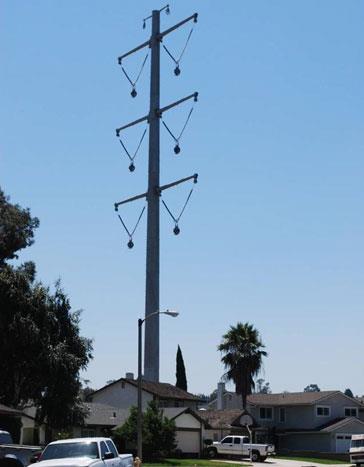
Industrial-scale transmission towers in a residential neighborhood. Less than 50 feet from front doors. Running past schools and parks. The route started with Loudoun Valley Estates — but the precedent it sets affects every residential neighborhood in the county. A smaller tax base and lower housing comps from this corridor affect every Loudoun taxpayer, not just the homeowners closest to the lines.
Dominion Energy is seeking approval from the State Corporation Commission to build a new high-voltage transmission line called "Golden to Mars" — named after two substations. The line would cut through residential Loudoun County — including Loudoun Valley Estates I and II — past multiple schools and parks, and run within feet of hundreds of homes.
PJM Interconnection, the regional grid operator, approved the Golden to Mars project in December 2023. Dominion then filed for a Certificate of Public Convenience and Necessity (CPCN) from the Virginia State Corporation Commission. The SCC hearing concluded after 11+ days of testimony — and a ruling is expected any day.
What the SCC decides will stand for generations. Once towers are built in a residential neighborhood, they stay. There is no undo button.
The SCC record shows that Dominion knew about the need for this line as early as 2022 — but filed its application in a way that left no time to properly study underground alternatives. SCC Staff called this out directly: Dominion "effectively ensured that its overhead routes are the only viable options."
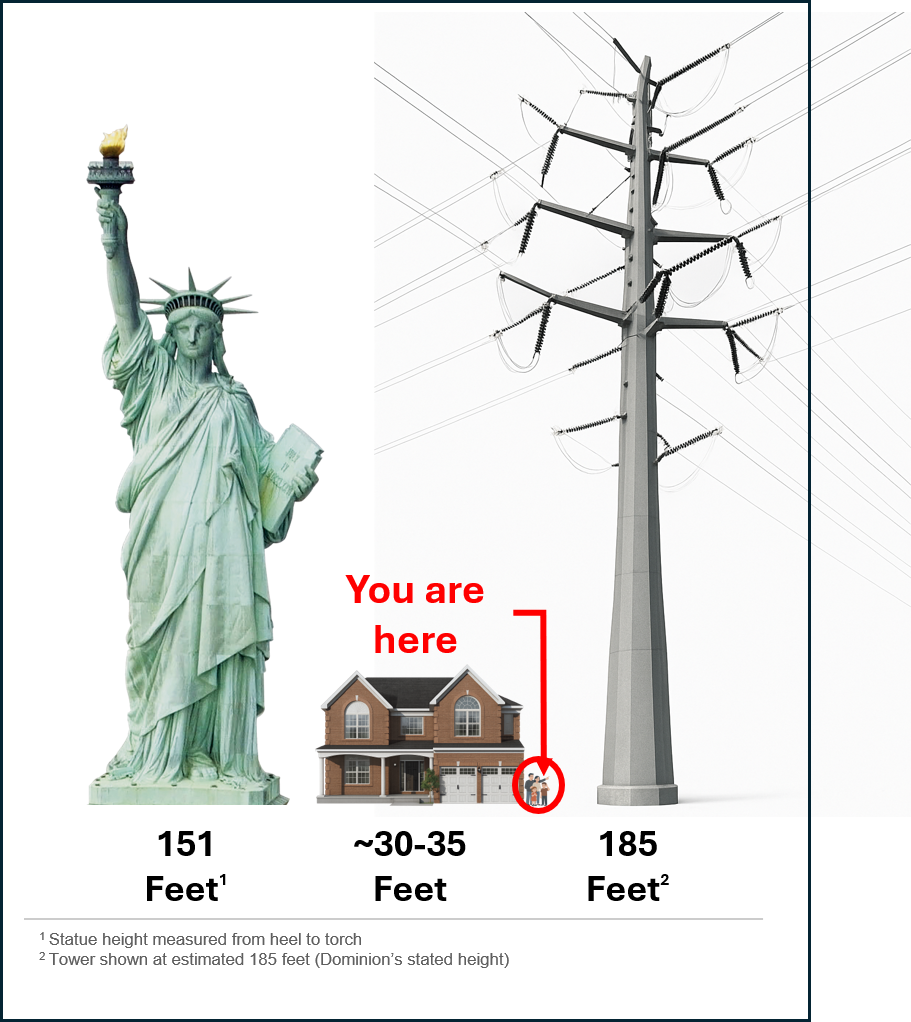
Once built, transmission towers are not moved. The impacts to health, property values, and quality of life are not temporary nuisances — they are generational burdens placed entirely on homeowners who had no say in the decision.
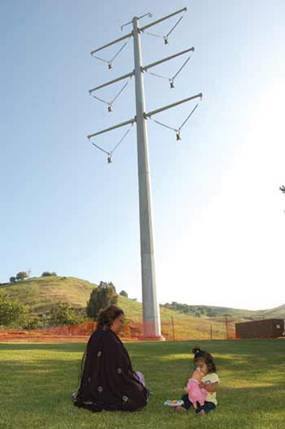
At 185 feet, these towers are taller than the Statue of Liberty (151 ft) and taller than most downtown office buildings. The visual and psychological impact on adjacent homes is permanent and irreversible.
500kV transmission lines generate electromagnetic fields strong enough to light a fluorescent bulb held underneath — without touching anything. The lines would run past multiple schools and within feet of hundreds of homes. The community deserves answers about long-term health impacts.
The assessed value of property within half a mile of the proposed corridor is $2.8 billion. A smaller tax base and lower housing comps affect every Loudoun taxpayer, not just the homeowners closest to the lines. Community signs throughout the neighborhood estimate $100,000+ in potential losses per household.
Dominion's overhead route requires 150 ft of new right-of-way for the full 8.3 miles. Trees removed. Sight lines destroyed. Parks altered. The underground alternative requires only an 8-foot wide trench — installed and restored.
The assessed value at risk within half a mile: $2.8 billion. This is not a small-neighborhood problem — it is a countywide economic issue that affects everyone from homeowners to schools funded by property taxes.
When Dominion presented visual simulations to the Board of Supervisors in January 2025, the photos were taken in summer — at peak foliage, when trees provide maximum screening. The actual view from homes in winter — when leaves are down and towers are fully exposed — is dramatically different.
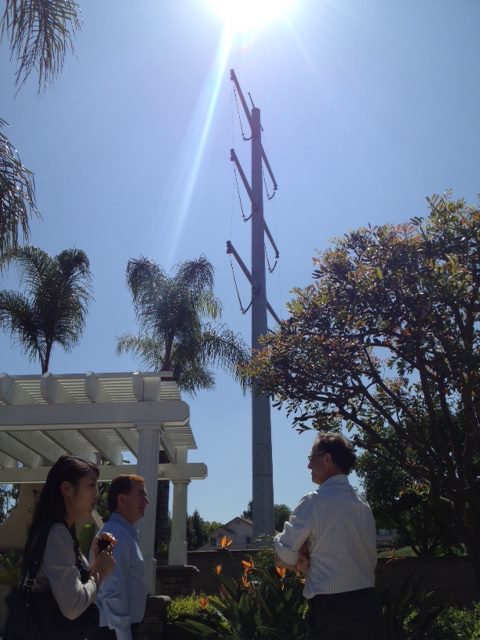
The photos from Chino Hills, California — where the same 185-foot towers were actually built — tell the real story. A California PUC commissioner who visited the site responded simply: "Oh my God, what have we done."
SCC visual simulations of the Loudoun routes show towers dominating sight lines from homes. The difference between what was presented to the Board and what will actually appear from a kitchen window is significant.
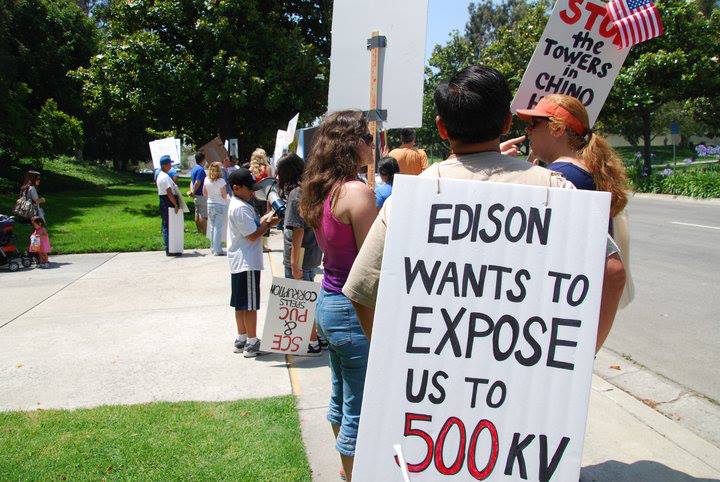
The response to this project extends far beyond the immediately affected neighborhood. Loudoun County residents, elected officials at every level, and even the City of Chino Hills, California have joined the fight. The SCC record reflects one of the largest community participation filings in a Virginia utility case.
Submitted directly to the SCC — among the largest community response filings in the case's history.
Attended Ashburn public hearings. Overflow crowds. Standing room only. Hundreds turned away.
For telephonic comment — in addition to thousands who showed up in person at hearings.
January 2025 resolution called for burying lines within 500 ft of homes and schools. County engineers confirmed it IS technically feasible.
The School Board took a formal position against Dominion's overhead routing — an extremely rare step for any school board on a utility matter.
Sponsored SB 827 and HB 1487, which passed both chambers bipartisan and directly name Golden-to-Mars as the target project.
Formally wrote to the Virginia SCC supporting LVE's position — the only U.S. city that successfully forced underground 500kV lines.
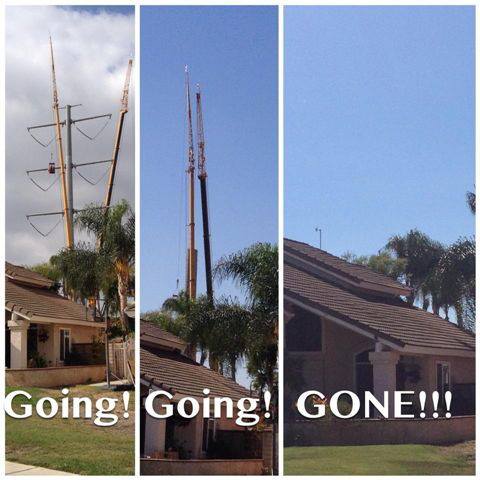
The same utility playbook. The same "underground is not feasible" claim. The same 185-foot towers next to homes and parks. Chino Hills residents fought back, took it to appeal — and the towers came down. This is what success looks like.
"Oh my God, what have we done."— California Public Utilities Commission Commissioner, upon visiting and seeing 185-ft towers installed next to homes in Chino Hills
The utility told Chino Hills that undergrounding 500kV was impossible. Independent engineers disagreed. The towers came down and underground was built. The same claim is being made in Loudoun. The same is false.
Despite every infeasibility claim, the underground alternative was built safely, reliably, and on time. Chino Hills is the only U.S. city with operating underground 500kV — and they formally wrote to the Virginia SCC to support LVE's position.
The utility started building immediately after approval, betting no one would make them remove towers. They were wrong. The California PUC reversed course — and ordered the utility to build underground at their own expense.
The question is not whether underground can be done. Chino Hills proved it can. The only question is whether our Board and SCC will demand it — before Dominion breaks ground and the leverage is lost.
SB 827 and HB 1487 passed both chambers of the Virginia General Assembly on a bipartisan basis in March 2026. The legislation was written specifically in response to the Golden-to-Mars situation. It creates a pilot program for underground installation — and the Board's formal support is a statutory prerequisite.
The bill specifically describes a "500 kV and 230 kV line, approximately 8.3 miles long, pending final CPCN approval as of February 1, 2026." That is Golden-to-Mars — by name and description.
The SCC may approve up to 4 qualifying underground pilot projects. Golden-to-Mars is eligible as the specifically-described project. The SCC must consider the legislation's intent in its ruling.
The bill requires local government support to unlock pilot program eligibility. Board inaction forecloses the underground pathway. A resolution supporting the program is required — not symbolic.
The bill requires showing technical feasibility. Loudoun County's own independent engineering has already established this in the SCC evidentiary record. The work is done — the Board just needs to act.
The pilot program includes a cost-sharing structure with a residential levy cap. The massive difference in long-term community benefit — versus the permanent harm of overhead towers — makes this a straightforward calculation.
The Virginia Mercury called this a nationally-watched precedent. If Virginia's SCC approves overhead lines through residential neighborhoods for data center load — after the legislature specifically directed underground — it will be a landmark decision that affects utility fights across the country.
We support growth. We support reliability. We are asking leaders to manage growth responsibly — not to accept permanent harm because a utility prefers the fastest, cheapest option for its shareholders.
Accept ALL 8 open space easements from LVE I and II. Zero fiscal impact to the County. Removes the viability barrier for hybrid/underground routes and signals the SCC that alternatives are supported locally.
Words matter before the SCC. Any Board statement accepting "any Route 3" becomes evidence in the ruling. Saying it is not a compromise — it is a concession. Your January 2025 resolution said underground. Hold to it.
Board support is a statutory prerequisite for underground pilot eligibility. Inaction forecloses the only legislative pathway. Pass the resolution and direct the County Attorney to continue active advocacy.
This is voluntary commercial load growth from data centers, not an emergency for homes or hospitals. The SCC record supports sequencing data center interconnections until underground infrastructure is available.
The SCC ruling is expected any day. Your supervisor needs to hear from you right now.
Contact Your Supervisor → Read the Truth About This Project