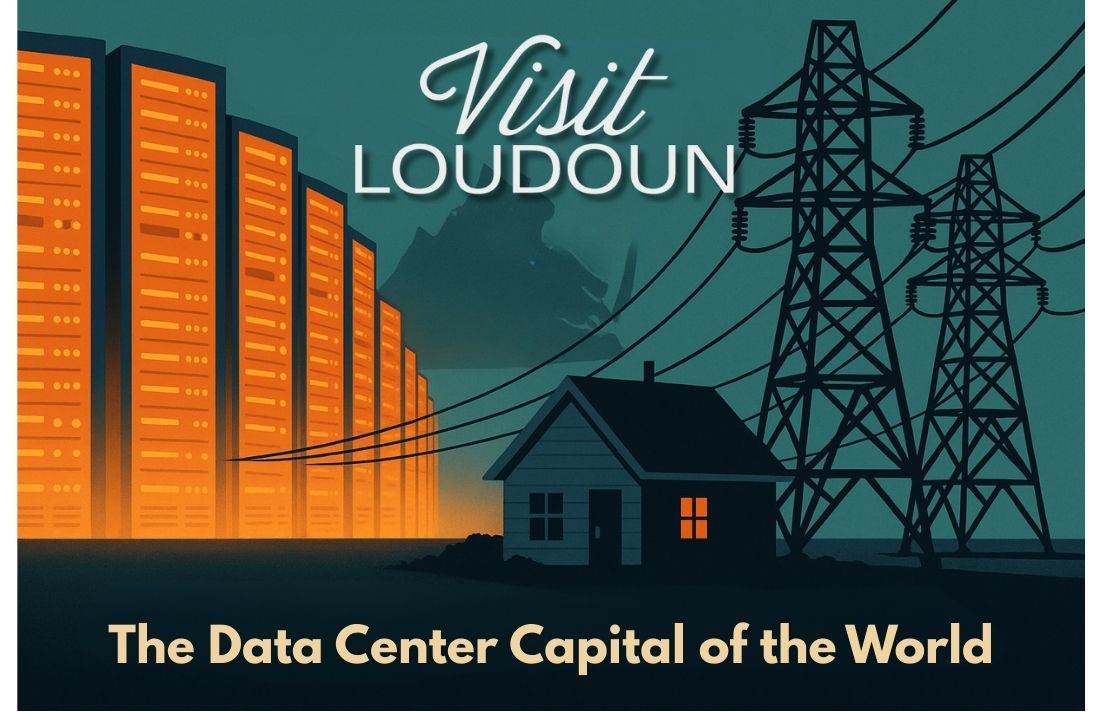
PJM labeled it a "Data Center Alley Local Solution." SCC Staff confirmed the lines "would NOT be needed but for multiple data centers." Dominion manufactured the urgency, buried the underground analysis, and used escalating threats to make overhead seem inevitable. It isn't.
This project was not triggered by failing service to homes or businesses. It was triggered by enormous new commercial load from data centers — facilities that did not exist a few years ago and whose operators were never required to ask the community's permission. When the only driver is new industrial load, routing through neighborhoods is not responsible — and the precedent this sets applies to every community in Loudoun.
"The lines would NOT be needed but for multiple data centers in northern Loudoun County."— SCC Staff Post-Hearing Brief, PUR-2025-00056
"Voting for data centers is almost political suicide. Loudoun County voters are done with them."— Supervisor Briskman (D-Algonkian)
The urgency Dominion used to justify skipping underground analysis was not inevitable. It was the result of deliberate choices — choices Dominion made, that SCC Staff identified, and that the evidentiary record proves.
Data center load forecasts were sufficient by 2022 for Dominion to know this project would be needed. Underground planning requires 3–5 years of lead time. That time was available. Dominion chose not to use it.
PJM formally approves the project in December 2023. The label is explicit: this is not a reliability project for existing customers. It is infrastructure for data center load.
Dominion waited more than 15 months after PJM approval before filing its CPCN application with the SCC. Then it claimed there was no time to study underground alternatives. SCC Staff called this out directly: Dominion "effectively ensured that its overhead routes are the only viable options." Dominion's own lead admitted Golden-to-Mars was the most complex project and was filed last.
FOIA records reveal that Dominion's entire basis for claiming VDOT right-of-way was unavailable for underground was a single email from 2024. VDOT only objected to open-cut excavation. Horizontal Directional Drilling (HDD) — the standard method for high-traffic corridors — was never proposed to VDOT. Not once.
County Witness Bob Brown testified that Dominion's Feasibility Study appears to conclude that underground "really seems to be feasible" — but the conclusion was changed to "infeasible." The final edits were made not by the engineering firm (Burns & McDonnell) — but by Dominion's own routing engineer. The independence of that study is compromised.
Loudoun County's own independent engineering directly contradicts Dominion's feasibility claims and is on the SCC record. The Board's own resolution in January 2025 recognized this. The engineering work has been done. The question now is whether leaders will act on it.
Every major claim Dominion used to justify overhead routing through residential neighborhoods falls apart under scrutiny. These aren't community opinions — they're findings from the SCC's own staff, FOIA records, and sworn testimony.
| Dominion Claims | What the Official Record Shows |
|---|---|
| FALSE"No time for underground engineering" | FACTPJM approved Dec 2023. Need known since 2022. Dominion waited 15+ months to file, then claimed urgency. Dominion's own lead admitted Golden-to-Mars was the most complex and filed last. |
| FALSE"Undergrounding is technically not feasible" | FACTSCC Staff: Dominion "effectively ensured that its overhead routes are the only viable options." Loudoun County's independent engineering directly contradicts this. Chino Hills, CA built underground 500kV successfully. |
| FALSE"VDOT ROW is not feasible for underground" | FACTFOIA reveals one email from 2024 in which underground in VDOT ROW was raised. VDOT only objected to open-cut excavation. Horizontal Directional Drilling (HDD) — standard for high-traffic corridors — was never proposed to VDOT. |
| FALSE"Underground was thoroughly evaluated" | FACTCounty Witness Bob Brown testified that Dominion's Feasibility Study "seems to conclude it's feasible" but the conclusion was changed to infeasible. Final edits were not by engineering firm Burns & McDonnell — but by Dominion's own routing engineer. |
| FALSE"The towers will barely be visible" | FACTSCC visual simulations show towers dominating sight lines from homes. Photos shown to the Board in Jan 2025 were taken in summer at peak foliage. Real winter views — and actual Chino Hills photos — tell the true story. |
| FALSE"Route 1F is a viable alternative" | FACTDominion's own counsel told the SCC: Route 1F is not under consideration. It was introduced as leverage — to make Route 3 seem like the reasonable compromise. It was never a real option. |
If Dominion's VDOT claim had no documented basis, what other claims deserve the same scrutiny? The Board and the SCC should demand evidence — not accept assertions at face value. The evidentiary record is closed. The burden of proof should have been higher.
Dominion used a deliberate escalation tactic: introduce progressively worse options so residents feel pressured to accept the "least bad" overhead route. None of the threats are substantiated. None of the alternatives were real options. The goal was leverage.
8.3-mile corridor through neighborhoods and schools. "Least impactful" by Dominion's definition — conspicuously avoiding data center property.
Residents told underground is "not feasible." Routes 3 & 4 presented as the only options. In reality: just the options Dominion preferred and controlled.
When resistance grew, Dominion added a new route crossing the county's most-traveled road, used by tens of thousands daily.
Towers pushed even closer to homes — some placed literally in residents' backyards. Pure escalation to make Route 3 seem "reasonable" by comparison.
A route that would require seizing private property. Then Dominion's own counsel told the SCC: "not under consideration." It was never real.
These are not community activists or advocacy groups. These are the regulator's own staff, elected representatives, and county engineers — all reaching the same conclusion.
"Dominion has effectively ensured that its overhead routes are the only viable options — despite the fact that the need for this Project had been known for a much longer period of time."— SCC Staff Post-Hearing Brief, PUR-2025-00056
"The lines would NOT be needed but for multiple data centers in northern Loudoun County."— SCC Staff Finding
"We were all blindsided." [On the AWS/GW Campus deal — the same community that was 'blindsided' by this data center decision must also push back on Dominion's overhead lines.]— Supervisor Turner, on the AWS/GW Campus deal and data center growth without community input
"Your January 2025 resolution said 'advocate for undergrounding within 500 ft of homes where feasible.' Your County engineers confirmed it IS feasible. Your own words. Your own analysis. Your continued support is the only consistent position."— Greater Loudoun community to the Loudoun County Board of Supervisors
The SCC ruling is expected any day. This is the moment to act — before the decision is made and the towers are built.
Contact Your Supervisor → Back to The Issue